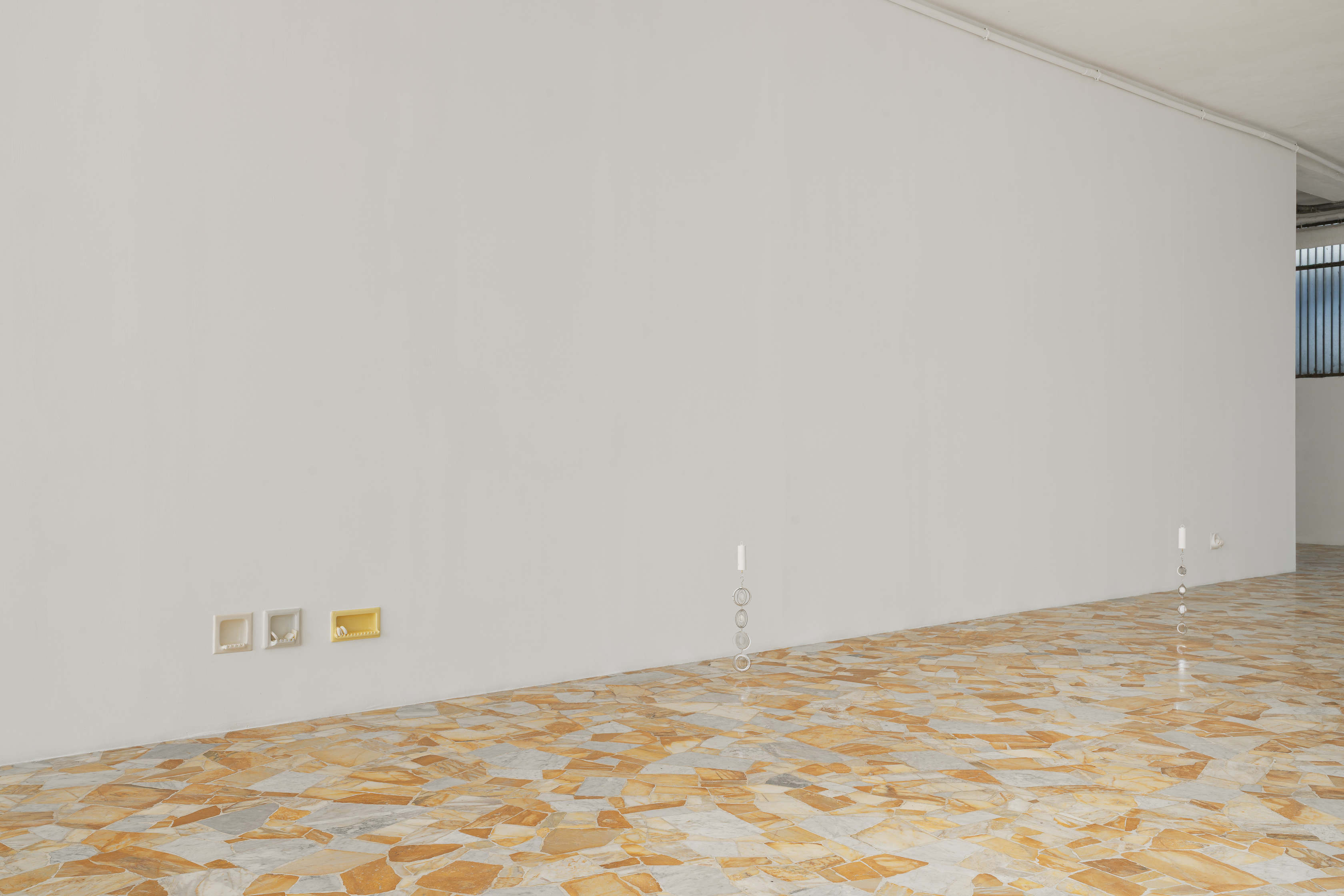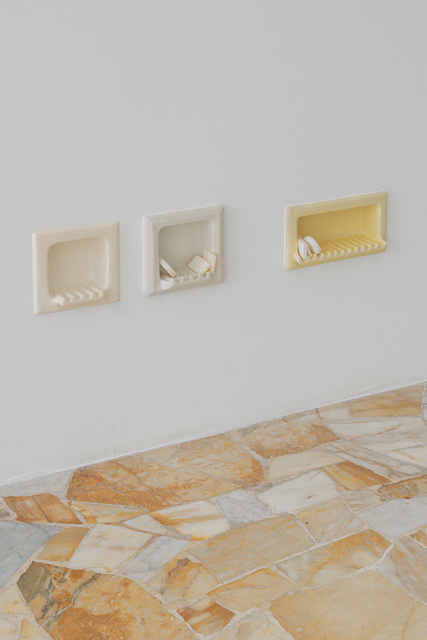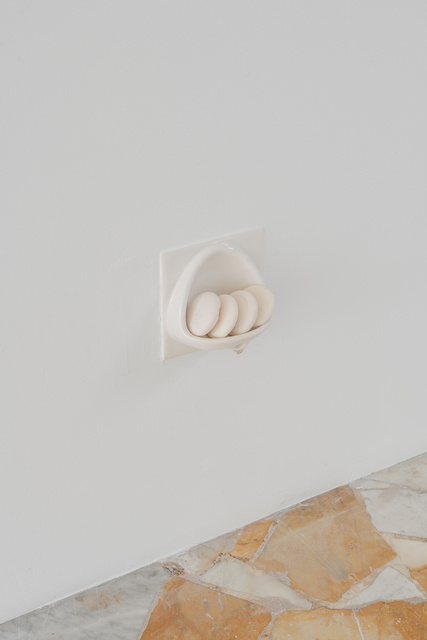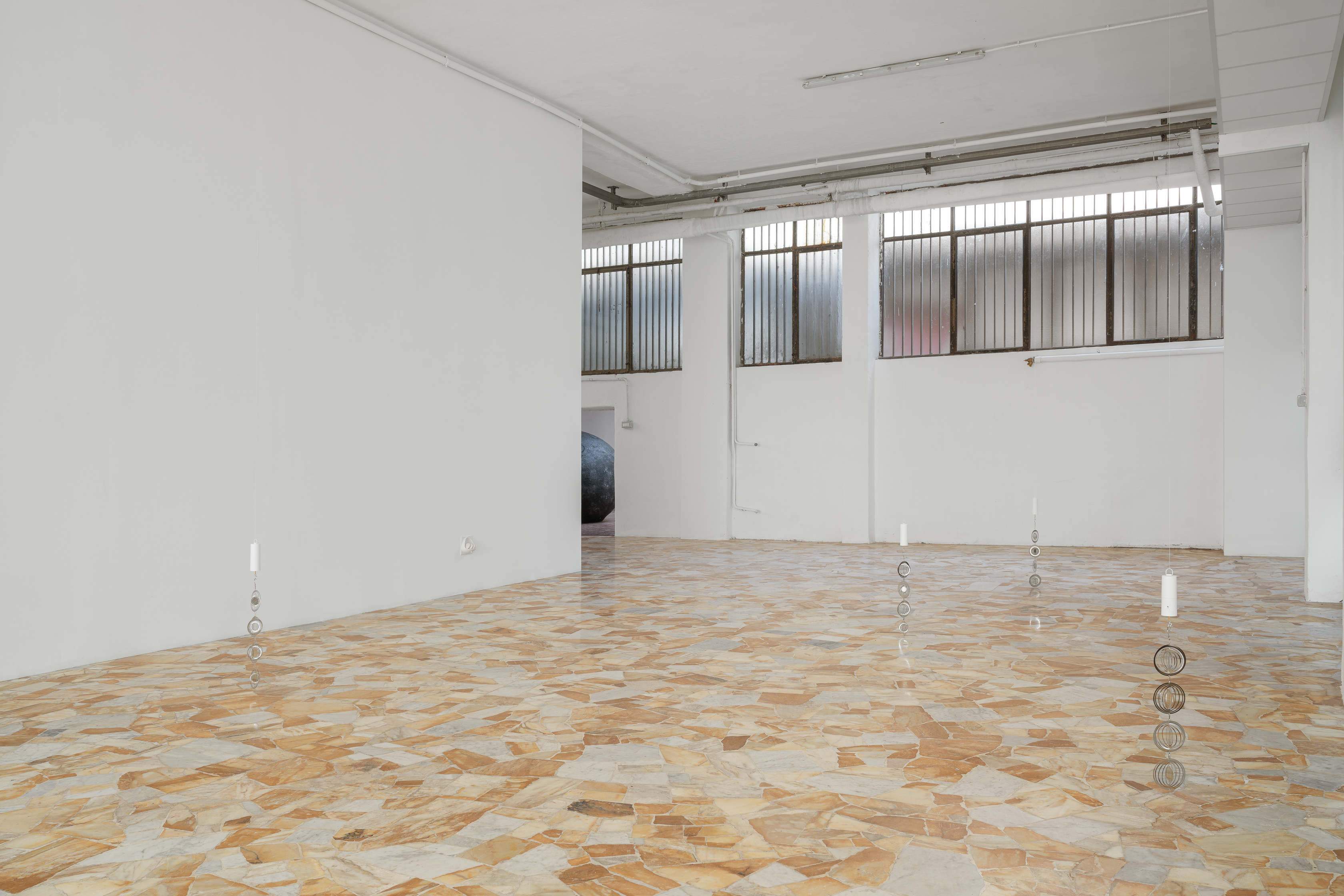
You cannot step twice into the same river, for other waters are flowing on – Heraclitus
Sometimes, if you stand on the bottom rail of a bridge and lean over to watch the river slipping slowly beneath you, you will suddenly know everything there is to be known. – Winnie the Pooh
(J.) The first time I caught Nancy’s work was in this really great group show at Laurel Gitlen in 2014, Mineral Spirits. It was a year of intensity, in that by recently moving to New York I thought I had to know and see everything. I did not know the people, I just had to know the art. There were sparks and glimmers in this rapacity where one was lucky enough to get to know the person, or at least maybe meet them or exchange a smile. That never happened with Nancy.
(K.) Her work kept re-appearing, and though each time it retrained my fascination, the experience changed as understandings expanded. My friend Lior and I would talk about it, or I would think back to the show in 2014, or a new essay or article would mention the work and I would again take it into consideration. It was a circle of consideration and re-consideration; with gaps of learning and leaving in-between.
(L.) There is a small exercise that I want to try with Nancy’s work. It starts with the letter J, peaks with the letter L, and ends with the letter O. It has already started, but here is where we discern it. There was Laurel, then there was Lior, and recently there was Lyndsy. Now there is Los Angeles, where she lives. I was really fascinated by this alliteration of form, and giddied by the promise that the letter ‘K’ was so prominent next to it, let’s think, Kristina Kite, her gallerist in Los Angeles. Letters are a choice that provide a loophole into a new consideration; like if you pronounced the word loophole you may find yourself either saying Nancy’s surname, or you may find resonance in the use of holes in her work.
(M.) What is meaning when once I heard a theory that a particular artist—recently deceased—chose to show with one gallerist named Max, just because the artist’s other gallerist was named Max? I have not been able to find much meaning into Nancy’s work, regardless of how much I have steeped thought into it, but that, today (and who knows for how long), is not such a bad thing. We praise memes, materials, and indeed all images, for their equivalent lack and promise of mendacity, and I cannot but help think that each time I have re-found Nancy’s work that I am finding truth in a falsehood.
(N.) J-K-L-M-N-O, these six letters are for me, basically the bridge of the alphabet— tying together that first section, which feels flowing and harmonious, to the second section, P through Z, which feels much more wavy and tense. There is a counterpoint rhythm to the two sections which necessitates these six letters as a middling bridge, from which one can look to both sides and see their balance. I like to think of Nancy’s work as this bridge of correlative lettering, being able to occupy directly a middling ground and blow perfectly O-shaped bubbles in every direction the water flows.
(O.) This is the last letter of Nancy’s surname, and it is perhaps the visual correspondent most recognized in her work. Holes punched through other holes, linking O’s together like those in Loophole or Pooh. I am pretty sure that two ‘O’s linked together make an attempt at infinity.
Alan Longino
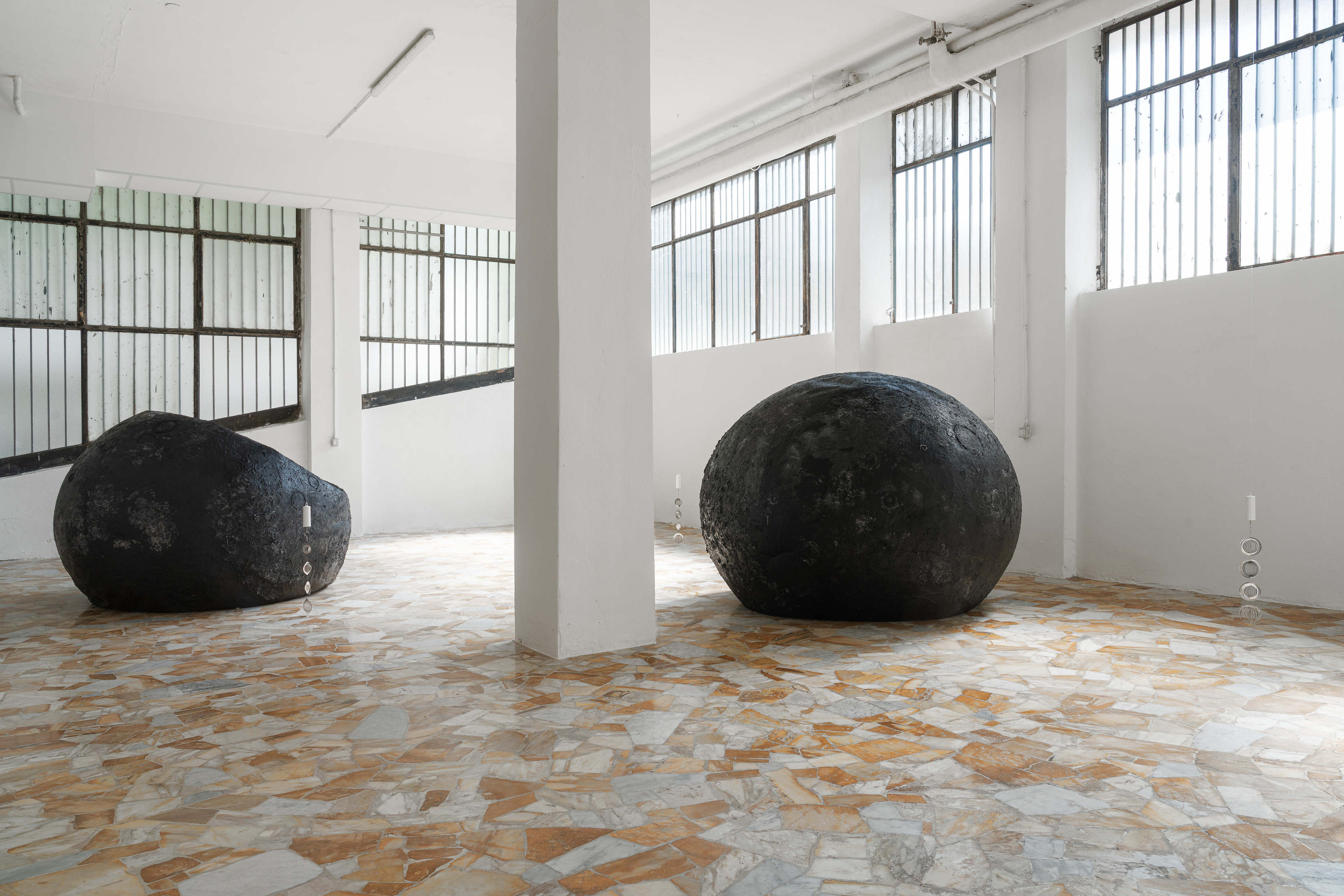
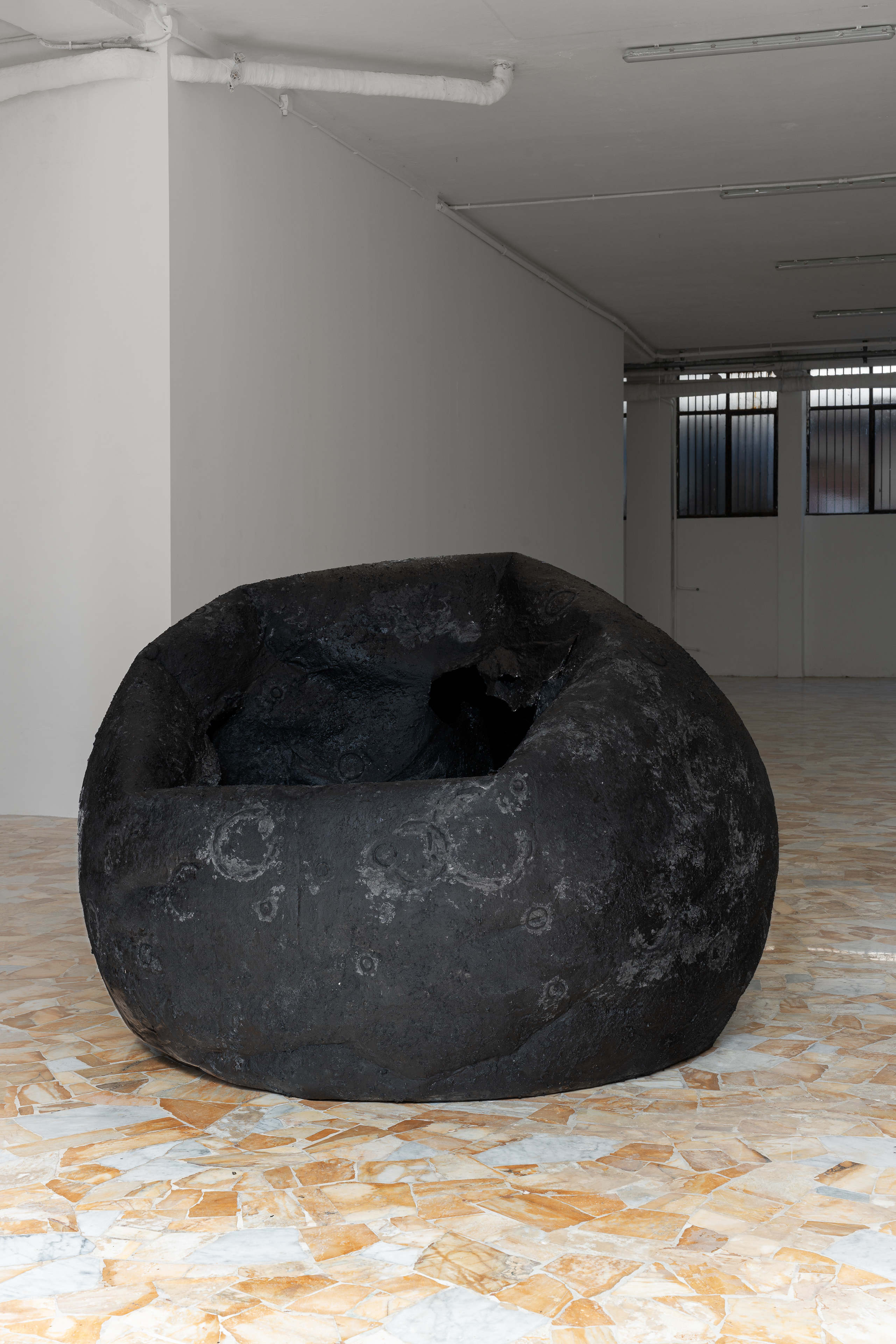
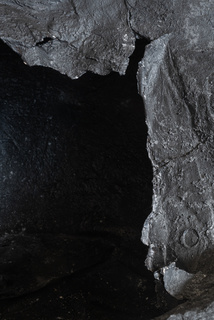
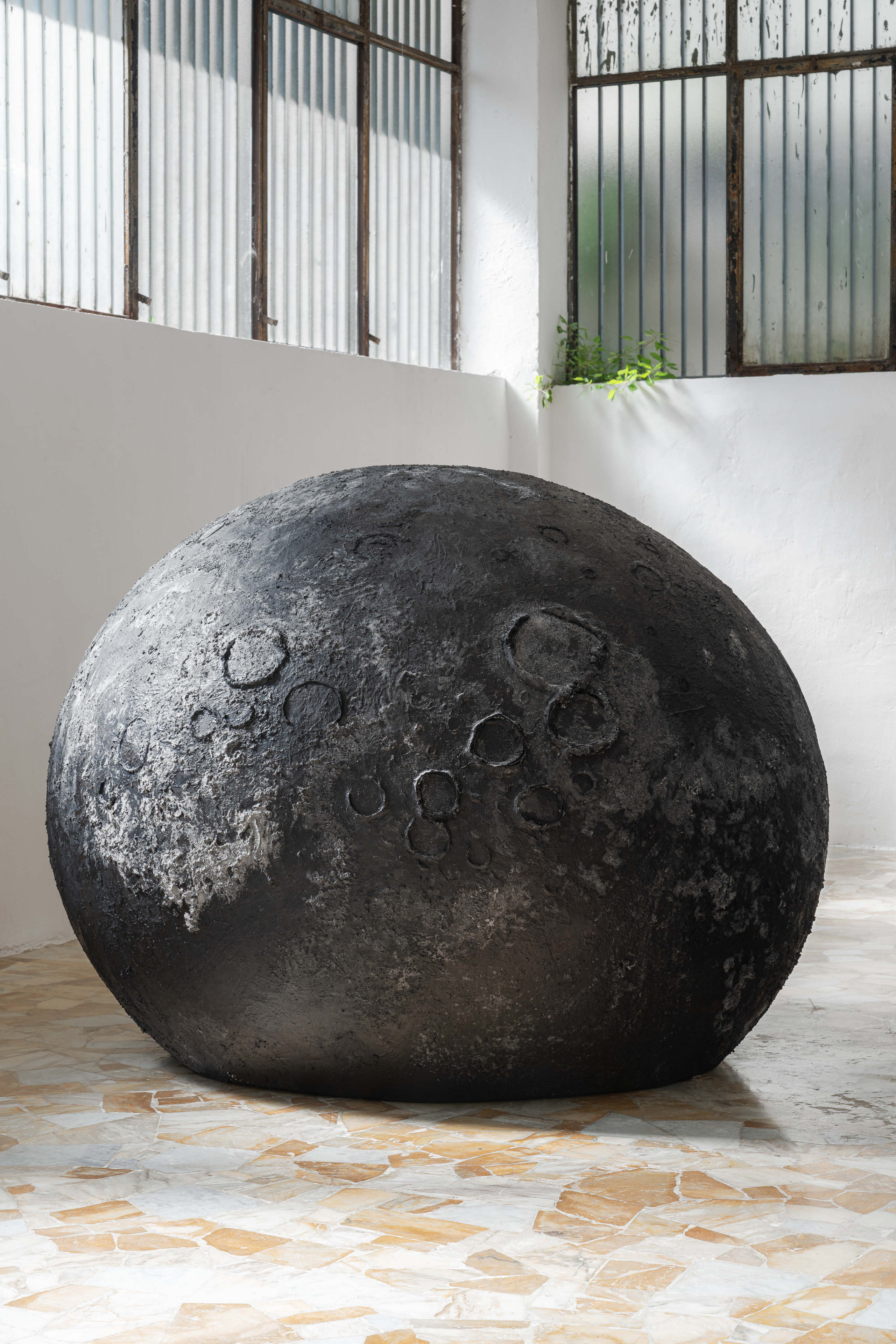
Paraselene is a phenomenon in the halo family. It’s the illusion of a quadruple moon that’s produced in rare atmospheric situations.
In Magic, the game, when Parasclene is cast you must let go of all enchantments. Every persistent illusion, every ongoing magical effect.
To stop believing that the light will always turn green. That the house is for sale. That there is a house. That there is Rome.
In 2022 or so Alan Longino sent me a press release that he wrote for The Square at Noon bis in 2019. It was scrapped before I ever read it. Gently, in a way I find compelling even if personally deflating, he says that hecan’t find meaning in my work.
In 2002 or so I remember having a conversation with Jim Brittingham, in front of the fireplace at my parent’s house in Flagsta!. We were trying to warm up his feet because maybe he had hypothermia. I was saying that I didn’t really care if my work meant anything and that I didn’t believe anything really, actually meant anything. I said that I was interested in what the work could be doing.
In 2009 or so, in a group critique about my work, Kate Levant said that she didn’t think my work meant anything but wondered what then happens in a vacuum of meaning.
In 2024 Kazuna Taguchi invited me to participate in A Reflection on the Sublime at The Museum of Modern Art in Hiroshima, Japan. Alan Logino also participated in the exhibition with three texts reflecting on his cancer, its treatment and the nature of the sublime. He wrote, “And so I must write, reflect, and love an ideathat may not be constructed so beautifully as the history of a name—a field of passions in that name—that has created in me a landscape that does impress upon me that celestial awe.”
In Hiroshima, I exhibited, Closer to Faces, which included steel “pig tail” posts I found in an empty lot not far from the museum. I was planning a mission to find more but was advised that stealing was taken seriously and punished severely. Naoko Sumi knew someone who worked in construction and they let us borrow the additional stakes I needed.
On the last day of the exhibition, she wrote to me with strange news about my work.
A man in his 30’s lifted one of the orange stakes. Our security staff asked him not to touch and hold the stake.
The man objected, asking why he should not be allowed to touch it. Our security sta explained but the man further objected, asking why he was not allowed to touch the stake while he was allowed to step on the flower petals. In a state of rage, he stomped on the orange stake once from above and then kicked it further. The wax holder of the candelabra is broken by his action. Our security staff asked the man to wait, but he said “Why should I wait?” and quickly left the museum.
Serendipity tracked with the relentlessness of a bounty hunter. Artemis II.